'/%3e%3cpath%20d='M115,73%20L115,340%20L68,340%20L68,93%20Z'%20fill='url(%23g2)'/%3e%3cpath%20d='M178,5%20L178,300%20L131,332%20L131,29%20Z'%20fill='url(%23g3)'/%3e%3c/svg%3e)
XAUT is the Tether Gold token: one XAUT represents one troy ounce of physical gold stored in LBMA-certified Swiss vaults, issued by Tether and available on Ethereum and Tron. Unlike a gold ETF or a futures contract, every token is backed by a specific allocated gold bar you can verify on-chain at any time.
The 30-Second Version: XAUT in Plain Language
Think of XAUT as a digital warehouse receipt for real gold. Tether buys physical gold bars, stores them in Swiss vaults certified by the London Bullion Market Association (LBMA), and then issues one XAUT token for every troy ounce held. You buy the token; you own a proportional claim to that gold.
Because XAUT lives on a public blockchain, you can check the total supply, trace which vault holds which bars, and transfer ownership to anyone in the world within seconds, at any time of day. No broker call required, no business-hours restriction, no courier needed.
As of early 2026, XAUT's market capitalisation sits above $1 billion, making it one of the two dominant tokenized-gold instruments alongside PAX Gold (PAXG).
Who Issues XAUT? A Look at Tether
XAUT is issued by TG Commodities Limited, a subsidiary of Tether Operations Limited, the company best known for issuing USDT, the world's largest stablecoin by circulation. Tether launched XAUT in January 2020, extending its reserve-backed model from dollars to gold.
Tether's audit partner for XAUT is BDO Italia, one of the network firms of the global BDO accounting organisation. BDO publishes quarterly attestation reports confirming that the on-chain supply of XAUT matches the physical gold held in custody. You can download these reports directly from Tether's transparency page.
Tether also publishes a live lookup tool: enter your XAUT wallet address and it returns the serial numbers, fineness, and weight of the specific gold bars allocated to your tokens. That level of traceability is not available with a gold ETF.
How XAUT Is Backed: Swiss Vaults and LBMA Standards
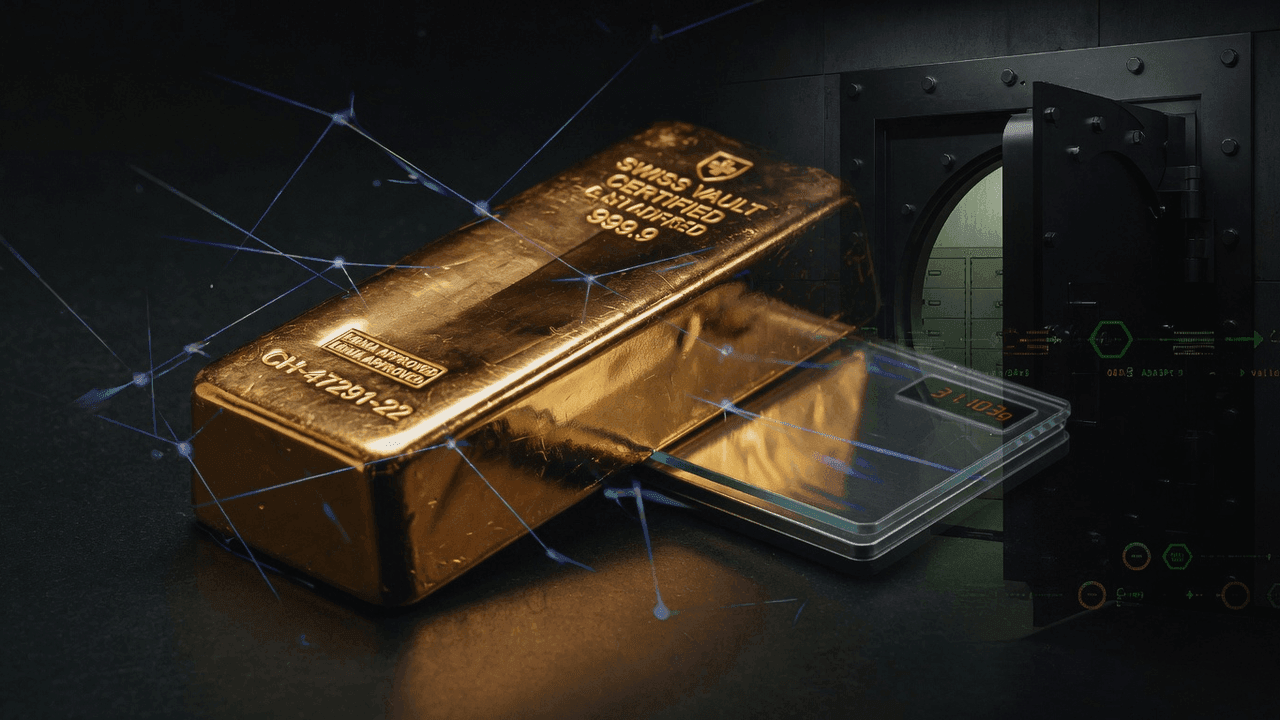
The gold backing XAUT is held in LBMA-certified vaults in Switzerland. LBMA (London Bullion Market Association) is the international trade body that sets the "Good Delivery" standard for gold bars, covering minimum purity (99.5%), weight tolerances, and vault security requirements. Swiss custody is common for high-value precious metals because of Switzerland's long-standing neutrality, legal stability, and specialised vault infrastructure.
Each gold bar allocated to XAUT is an individually identified, physical good-delivery bar. This is "allocated" storage, meaning your gold is not pooled with other assets or lent out. Allocated storage is the gold standard (no pun intended) because the custodian cannot use your metal to meet its own obligations.
Storage fees for XAUT holders are zero. Tether absorbs vault costs within its operating model. By comparison, a gold ETF typically charges 0.15–0.40% per year in management fees, which erodes your position silently over time.
How to Verify XAUT Backing Yourself
Trustworthy systems allow independent verification. Here is how you can check XAUT's backing without relying on Tether's word alone:
- On-chain supply: Go to Etherscan and look up the XAUT contract address (
0x68749665FF8D2d112Fa859AA293F07A622782F38). The "Total Supply" figure shows exactly how many XAUT tokens exist at this moment. - Tether Gold bar lookup: Visit gold.tether.to and enter your wallet address to see the specific bar serial numbers allocated to your tokens.
- BDO Italia attestation reports: Published quarterly at Tether's transparency hub. Each report lists total tokens outstanding and confirms the custodian holds at least that quantity of gold by weight.
- Token contract audit: The XAUT smart contract has been reviewed by independent security firms. Audit reports are publicly available on Tether's GitHub repository.
Combining on-chain supply data with the quarterly BDO attestation gives you a reasonably complete picture without trusting any single party. No gold ETF offers this level of real-time on-chain transparency.
XAUT Supply, Market Cap, and Trading Volume
Note: all figures in this section fluctuate with the gold price and with new minting or redemption activity. Treat the numbers below as reference points for early 2026, not guaranteed current figures. Always verify live data on Etherscan or CoinGecko.
- Circulating supply: Approximately 245,000 to 260,000 XAUT tokens, each equal to one troy ounce of gold.
- Market capitalisation: Approximately $750 million to $1.1 billion, depending on the gold spot price (gold has traded between $2,800 and $3,300 per troy ounce in 2026).
- 24-hour trading volume: Typically $5 million to $30 million across centralised exchanges; lower than PAXG on most days.
- Primary network: Ethereum (ERC-20), where the majority of DeFi integrations exist. XAUT is also available on Tron (TRC-20) for lower transaction fees.
XAUT is smaller than PAX Gold (PAXG) by market cap, but both are significantly larger than competing tokenized-gold products. Combined, XAUT and PAXG represent over 90% of on-chain tokenized gold liquidity.
XAUT vs PAXG vs Gold ETFs vs Physical Gold
The table below compares the four main ways to get gold exposure, across the dimensions that matter most for a long-term holder.
| Feature | XAUT (Tether Gold) | PAXG (PAX Gold) | Gold ETF (e.g. GLD) | Physical Gold |
|---|---|---|---|---|
| Backing | 1 troy oz allocated bar, LBMA Swiss vaults | 1 troy oz allocated bar, Brink's London vaults | Pooled gold (unallocated) held by custodian | The coin or bar you hold directly |
| Issuer | Tether (TG Commodities Ltd) | Paxos Trust Company | Asset manager (e.g. SPDR / World Gold Council) | Mint / bullion dealer |
| Auditor / Attestation | BDO Italia, quarterly | Withum, monthly | KPMG (annual); custodian inspections | N/A (self-custody) |
| Annual storage fee | Zero for holders | 0.15% per year (deducted in PAXG) | 0.40% (GLD) to 0.10% (IAU) | Varies: home safe = $0, private vault = 0.5–1% |
| Settlement speed | Blockchain: 12 seconds (ETH) | Blockchain: 12 seconds (ETH) | T+1 through T+2 (stock exchange settlement) | Days to weeks (shipping, insurance) |
| Minimum purchase | Fractions of 1 oz (buy 0.01 XAUT) | Fractions of 1 oz (buy 0.01 PAXG) | 1 share (~$200 for GLD) | Typically 1 oz coin (~$3,000 in 2026) |
| Physical redemption | Yes, for qualified holders per Tether terms (minimum lot sizes apply) | Yes, for qualified holders per Paxos terms | Not available to retail investors | You already hold physical gold |
| DeFi / lending use | Yes: use on Perfolio and select DeFi protocols | Yes: broader DeFi integrations currently | No direct DeFi use | No (must tokenize first) |
| 24/7 trading | Yes (crypto markets) | Yes (crypto markets) | No (exchange hours only) | Dealer hours only |
| Regulatory framework | Commodity token; regulatory status varies by jurisdiction | New York-regulated trust company (NYDFS) | SEC-registered investment product | Property law in most jurisdictions |
How to Buy XAUT
You have several options depending on where you are and how much you want to buy.
Centralised Exchanges
XAUT is listed on several major centralised exchanges including Bitfinex (the primary market, given Tether's close ties to Bitfinex), Kraken, KuCoin, and Gate.io. You will need to create an account, complete identity verification (KYC), and fund it with fiat currency or another cryptocurrency before purchasing.
Decentralised Exchanges (DEX)
XAUT can be swapped on Uniswap and other Ethereum-based DEXs against USDT, USDC, or ETH. You need a self-custody wallet (MetaMask or equivalent) and sufficient ETH to cover gas fees. DEX prices are slightly less liquid than centralised exchange prices for XAUT specifically.
Buy XAUT In-App via Perfolio
The simplest route for most users is to buy XAUT directly inside the Perfolio app. Perfolio sources XAUT at market rates and deposits it straight into your Perfolio vault, ready to use as collateral for an XAUT-backed loan. You skip the manual exchange account setup and the wallet management complexity.
How to Use XAUT Productively
Holding XAUT is not the only option. Here are three practical uses that go beyond passive storage.
Inflation Hedge and Long-Term Store of Value
Gold has appreciated roughly 30% in US dollar terms over the past 12 months (as of May 2026), outperforming most bond portfolios. Holding XAUT gives you that same exposure without the logistical headaches of physical ownership: no need for a safe, no insurance premium, no dealer spread on the way out. You can sell your XAUT at spot price on any exchange at 2 am on a Saturday.
Lend Your XAUT on Perfolio for under 5% APR
On Perfolio's XAUT lending platform, you can deposit your XAUT as collateral and borrow USDT at a variable rate typically under 5% APR, freeing up cash for other uses while your gold position stays intact. If you hold $50,000 of XAUT, you can access up to $38,500 in USDT (at 77% LTV) without selling a single ounce. Repay on your own schedule with no EMIs, no credit check, and no fixed deadline. For a full walkthrough, see our XAUT lending complete guide.
Redeem for Physical Gold
XAUT holders who meet Tether's minimum lot requirements can request physical delivery of the allocated gold bars backing their tokens. The process involves identity verification, agreeing to Tether's redemption terms, and coordinating with the vault operator for shipping or collection. While this pathway exists, most holders treat it as a fallback option rather than a routine transaction. Practical minimum size is typically around 430 troy ounces (one good-delivery bar), so physical redemption is generally suited to institutional holders.
Tax Treatment of XAUT
Tax rules for tokenized gold vary significantly across jurisdictions and are evolving as regulators clarify their positions on digital assets backed by commodities. The following is a general orientation only; it does not constitute tax advice. You should consult a qualified tax professional in your country.
- United States: The IRS treats cryptocurrency as property. Gains on XAUT may be subject to capital gains tax (short-term or long-term depending on holding period). Some analysts argue XAUT could be treated as a gold collectible subject to the 28% collectibles rate, but there is no definitive IRS guidance on tokenized gold as of 2026.
- European Union: Treatment varies by member state. Germany, for example, exempts gains on certain crypto assets held over one year. The UK's HMRC treats crypto assets as capital assets. VAT treatment also differs: physical gold sales are VAT-exempt in the EU, but whether XAUT qualifies is country-specific.
- UAE and GCC: No personal income tax or capital gains tax in many GCC states as of 2026, making XAUT attractive for residents. Corporate tax rules may apply to businesses.
- Borrowing against XAUT: In most jurisdictions, borrowing against an asset (rather than selling it) is not a taxable event. This is one reason why Perfolio's XAUT loans can be tax-efficient: you access liquidity without triggering a disposal. Again, confirm with a local tax adviser.
Risks of Holding XAUT
No asset is without risk. Before buying XAUT, you should understand these key risk categories.
Issuer Risk
You are trusting Tether to hold the gold it claims to hold and to honour redemptions. While BDO Italia's quarterly attestations provide meaningful comfort, an attestation is not a full audit. If Tether experienced a serious financial or legal crisis, access to XAUT redemptions could be disrupted. This is the same counterparty risk you take with any custodied gold product.
Smart Contract Risk
XAUT on Ethereum is governed by a smart contract. If a bug exists in the contract code, funds could theoretically be frozen or stolen. The XAUT contract has been reviewed by third-party security firms, but no code review is a guarantee of zero risk. Holding in a self-custody wallet mitigates exchange-level risks but does not eliminate smart contract risk.
Gold Price Volatility
XAUT tracks the gold price precisely. Gold fell approximately 20% in real terms during the 2022 rate-hiking cycle and has experienced several sharp single-day moves of 2–4% even during bull markets. If you have borrowed against your XAUT on Perfolio and the gold price drops significantly, you may need to add collateral to avoid liquidation of part of your position.
Regulatory Risk
Regulators in several jurisdictions are still deciding how to classify tokenized commodity products. A future ruling that treats XAUT as a security rather than a commodity could affect exchange listings, custody arrangements, and tax treatment. The regulatory environment for digital assets is materially more settled in 2026 than it was in 2022, but meaningful uncertainty remains.
The Future of Tokenized Gold
The broader tokenized real-world asset (RWA) market grew from roughly $2 billion in 2023 to over $20 billion by early 2026, with gold representing one of the most established categories alongside tokenized US Treasuries and private credit. Several forces are driving continued adoption.
Central banks globally have added over 1,000 tonnes of gold to reserves each year for the past three consecutive years, according to World Gold Council data, reflecting concern about dollar-denominated reserve concentration and geopolitical risk. That same logic applies to individual investors: as trust in fiat currencies wobbles, gold's "no-counterparty" characteristic becomes more valuable.
The introduction of clearer crypto asset regulation frameworks in the EU (MiCA, effective 2024), the UK, and increasingly in Asia has reduced the regulatory uncertainty that previously discouraged institutional participation. Several major asset managers have announced tokenized gold products or expressed interest in the sector since early 2025.
For Perfolio specifically, the growth of XAUT and the tokenized gold market directly expands the pool of users who can access gold-backed loans without first converting physical gold into a digital token. You can learn more about how XAUT compares to physical gold ownership or explore the full Perfolio glossary for definitions of every term used on this platform.
Frequently Asked Questions About XAUT
Is XAUT a stablecoin?
No. XAUT is a commodity-backed token, not a stablecoin. Its price moves with the gold spot price, which fluctuates daily. A stablecoin like USDT is pegged to the US dollar and designed to hold a constant $1 value. XAUT's dollar value changes every time gold prices move, just as the value of a physical gold coin changes.
Can I redeem XAUT for physical gold?
Yes, in principle. Tether's redemption programme allows qualified XAUT holders to request delivery of the physical gold bars backing their tokens. In practice, the process requires identity verification, agreement to Tether's terms, and arranging logistics with the vault. The minimum redemption size aligns with good-delivery bar weights (around 400 troy ounces), so physical redemption is typically used by institutional holders rather than retail buyers. For most retail users, selling XAUT on an exchange is the practical exit route.
Is XAUT regulated?
XAUT is issued by TG Commodities Limited and is classified as a commodity-backed token in most jurisdictions. It does not currently have the equivalent of a national banking regulator licence the way Paxos (PAXG's issuer) holds a New York DFS trust company charter. Tether publishes quarterly BDO Italia attestation reports and operates under applicable commodity and financial regulations in jurisdictions where it is active. Regulatory clarity for tokenized gold products continues to improve globally, but you should verify the status in your own jurisdiction before purchasing.
How does XAUT differ from a gold ETF?
Several key differences apply. First, XAUT tokens are allocated to specific, identified gold bars; most ETF shares represent a pooled interest in unallocated gold. Second, XAUT has zero holding fee while gold ETFs charge 0.10–0.40% annually. Third, XAUT trades 24 hours a day, seven days a week on crypto markets, whereas ETF shares can only be bought and sold during stock exchange hours. Fourth, you can use XAUT as DeFi collateral (for example, on Perfolio) to generate yield or borrow against; ETF shares have no equivalent DeFi utility. Fifth, retail investors cannot redeem ETF shares for physical gold, whereas XAUT redemption for physical bars is possible for large enough holders.
What is the minimum amount of XAUT I can buy?
On most exchanges, you can buy fractional XAUT tokens, typically down to 0.001 XAUT or smaller, so there is no meaningful minimum. With gold at approximately $3,100 per troy ounce in early 2026, that means you could start with as little as $3.10 of XAUT exposure. The Perfolio app also allows fractional XAUT purchases as part of the in-app onboarding flow.
Is my XAUT safe if Tether goes bankrupt?
Because XAUT is backed by allocated gold (meaning specific bars are legally assigned to XAUT holders, not pooled into Tether's general assets), those bars should be ring-fenced from Tether's creditors in an insolvency scenario. However, this legal protection depends on how courts interpret the ownership structure in the jurisdiction where the vault operates and where Tether is incorporated. This remains a theoretical tail risk rather than an operational one. BDO Italia's attestations confirm the gold exists and is held for XAUT token holders, which provides evidence of the allocation. For maximum comfort, review Tether's terms of service and, if this risk concerns you, consider a product issued by an entity with a regulated trust charter such as Paxos.
Can I earn yield on XAUT?
Gold itself does not pay interest, but you can put XAUT to work. On Perfolio's lending platform, you deposit XAUT as collateral and borrow USDT at a variable rate currently under 5% APR. This is not yield on the XAUT per se; it is a low-cost loan that lets you access liquidity without selling. Some DeFi protocols also accept XAUT as collateral. Always assess the smart contract risk and liquidation conditions of any protocol before depositing.
What happens to my XAUT if the gold price falls sharply?
If you simply hold XAUT, a price fall reduces the dollar value of your holding, just as it would with a physical gold coin or a gold ETF share. You still hold the same number of tokens; the gold price just dictates what each token is worth in dollars. If you have borrowed against your XAUT on Perfolio, a significant gold price decline could push your loan close to the liquidation threshold (set at a specific LTV level). In that case, Perfolio will notify you and give you the option to repay part of the loan or add more collateral before any automatic liquidation occurs. See how Perfolio works for the full explanation of how margin calls and liquidation are handled.
Related Reading
- The Perfolio Gold Standard: How XAUT Backing Works
- XAUT vs Physical Gold: Which Is Right for You?
- XAUT Lending: The Complete Guide to Borrowing Against Gold
- Perfolio XAUT Loan: Rates, LTV, and How to Apply
- Gold-Backed Loans Explained
- How Perfolio Works: Step-by-Step Guide
- Perfolio Glossary: Every Term Defined